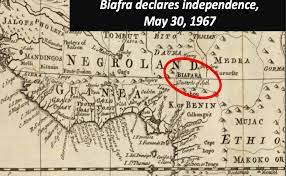
Of Bianca and Biafra ( or Bịanka and Bịafara )
M. O. ENE
In a piece titled ‘Used to think “Bianca” & “Biafra” were Igbo words!’ (ElombahNews, July 14, 2021), Farooq Kperogi made light of his “ignorance.”
First, it is amazing that enlightened Nigerians still use “warlord” for the head of state of the Republic of Biafra, General Chukwuemeka Odumegwu-Ojukwu. Biafra was an independent country of law and order. Its leader was not a “warlord” by any stretch of the imagination. He did not start the war; General Yakubu Gowon did. Words do have meanings. The persons who came close to the “warlord” tag were Colonels Benjamin Adekunle and Murtala Muhammed.
BIANCA
“Bianca” is as Italian as “Blanca” is Spanish. It means “fair”—when referring to complexion, or “white”—when referring to color. The name appears as Fiona in Irish, Alba (Latin), Blanche (French), and Dawn (English); in Igbo, “Nwaanyịọcha,” but it is used generically to address fair-complexioned women. In modern times, “Oyibo” is used, but it refers more to people of European extraction. “Ọchakaọmaka” is derogatory. A good Igbo equivalent from antiquity is “Ụgbana” (egret) or “Nwaugo,” which exalts magnificence (of an eagle) more than a woman’s fair complexion.
This is about a specific Bianca: the former Nigerian ambassador to Spain, Mrs. Bianca Olivia Ọdịnaka Odumegwu-Ojukwu, nee Onoh. “Bianca” is from “Bịa nka,” which in Enūgwu Ngwuo dialect means “come here.” How could anyone be so named? Names do not always have to be philosophical. We have Toosweet and Diewait in Nollywood, as well as Nnaji (father holds…).
Bịanka is an Igbo name. The fact that Latin ‘C’ replaced Igbo alphabet ‘K’ should not deny the Igbo origin. Many spelling variants of Mohammed/Muhammadu, Farooq/Farouk, and Ghadaffy/Qadafi exist; they do not take away the Arabic origin. Bịanka is as Igbo as Chiọma, Ngọzị, Ifeọma, and Ijeọma.
BIAFRA
Kperogi was right in asserting that Biafra is not Portuguese; it is not. Many people bear the names given to them by others. The Fulani coined “Yariba,” from which Yoruba reportedly emerged. It is not farfetched that “Portuguese explorers and cartographers” slapped the name on the area. However, they could not have fished out a name from nomenclatural nowhere when they could have used a Portuguese word as they did with Lagos (from lagoon), and Fernando Po across the water.
Enter Asari-Dokubo. In a February 2016 interview, he offered a version of Kalabari-Ijaw origin of ‘Biafra’: “Bia fulo.” He explained: “The Kalabari of Kula named the estuary of Santa Barbara Bia fulo [meaning “not properly cooked”] because of the turbulence of the sea at the estuary. The Portuguese like they did to many other names, words, and phrases which they could not pronounce properly named the area Biafra. Later the coastline from the estuary of the River Nun to the coast of Gabon was named the Bight of Biafra.”
Asari went on to buttress the Ijaw origin by referring to a well-known fact: that the name was suggested by Frank Opigo, an Ijaw, for defunct Eastern Nigeria in 1967. Biafra was already a popular name that every primary schooler knew. It was easily adopted.
Biafra was neither an Igbo nation nor, grammatically speaking, an Igbo word. Many other nations made up Biafra with the Igbo. Kperogi’s Igbo friend shot wild with “bia fara,” literally meaning “come take”; no, that is “bia were.” However, he was right about “bia fara.” In Igbo language, two consonants do not co-occur. So, if Biafra were an Igbo nation, the name would have been BIAFARA, meaning “come and squeeze in,” an apt expression welcoming back survivors of the Pogrom in which over 50,000 people were butchered across Northern Nigerian in 1966.
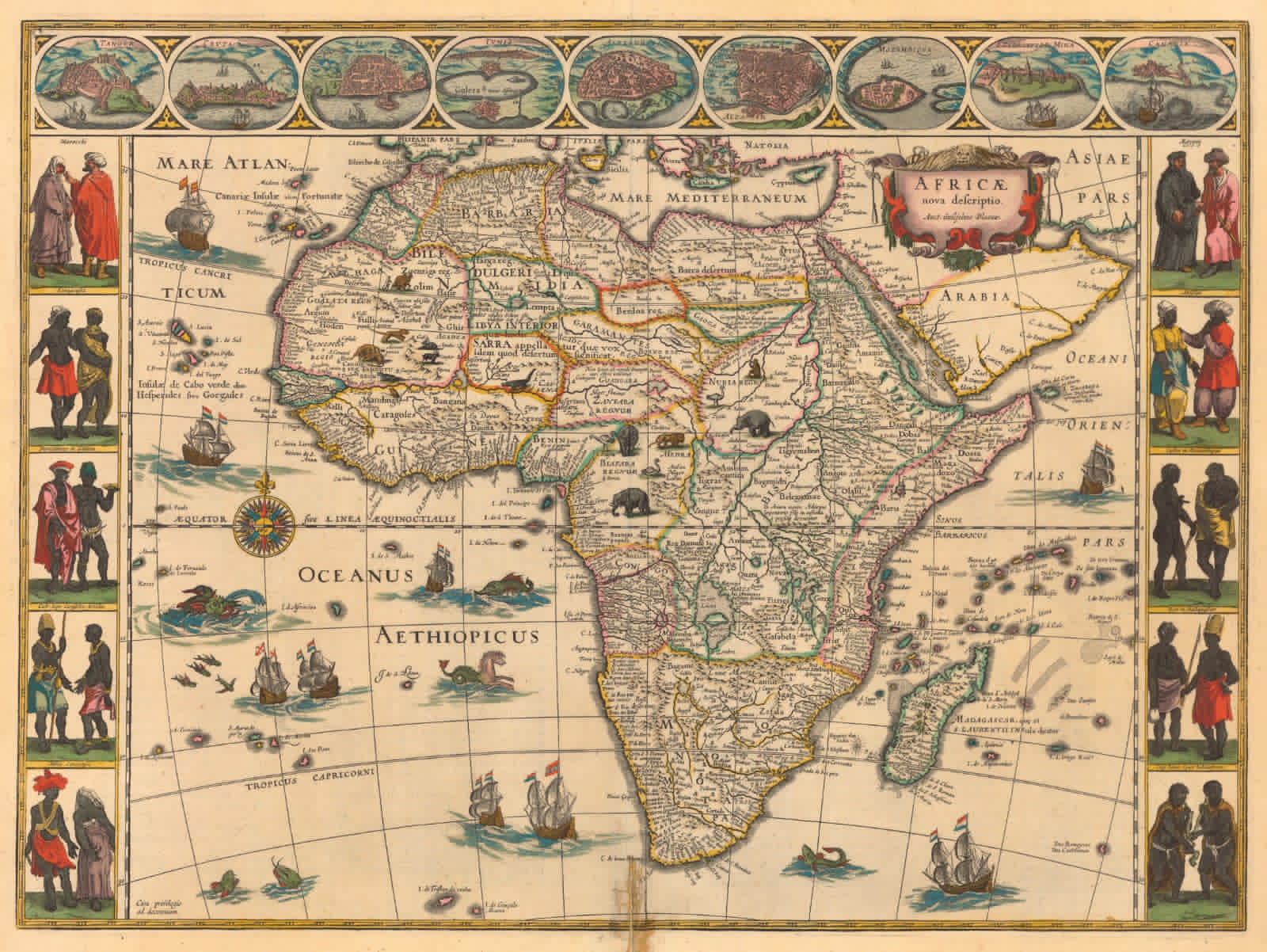
Interestingly, old maps of the area, before the Bights of Benin and Biafra appeared, show “Biafara” as a region east of Benin and south of Zamfara and Bornu (See map of Africa by Abraham Ortelius, 1584). Dokubo’s version cannot sustain on his say-so. It is likely that “Biafara” became “Biafra,” from “Biafar” in later maps, just as “Ibani/Ụbānị” became Bonny. It is wrong to state “that Biafra was singlehandedly invented by Portuguese explorers and cartographers to refer to the Gulf of Guinea stretching from the Niger River delta to northern Gabon.” Biafra referred to an area that encompasses the current Igbo country and was clearly documented as “Biafara” in pre-slavery maps.
Kperogi asked a pertinent question: “If Biafra would be an ethno-state, what’s hard about coming up with an Igbo name for it?” Sadly, even educated Nigerians still believe that Biafra was an Igbo affair. It was not. It had over 30 ethnic minorities. Many officials were not Igbo. Top Biafran generals such as Archibong and Nsudo were not Igbo. The secretary to the government N.U. Akpan was not Igbo. The most popular Biafran after Ojukwu himself was Okon Okon Ndem—not Igbo. The last head of state who signed the cessation of hostilities (not surrender), General Philip Effiong, was not Igbo.
If the new Biafra ends up being ethno-Igbo, it will not be “Biafra”; it will be something else. So, while Kperogi regrets not taking literature in high school, he should regret more not being taught the history of Nigeria-Biafra War (July 6, 1967 – January 12, 1970).
Should the quest for restructuring by referendum happen, the southeast and any culturally Igbo community that wants to merge have a common Igbo name in circulation: Aladimma (àlà dị mmā… meaning “the good land”: the land that God gave to a gifted generation of hardworking and humane people. Nigerians should do just that and give each other a breathing space, where Aladimma, Arewa, Bornu, Oduduwa, and the middle minorities relate with respectful reciprocity.
In conclusion, both Bịanka and Bịafara are Igbo lexical items. Distortions of Igbo words by colonial civil servants are common: Afikpo (Ehugbo), Awka (Ọka), Awkunanaw (Ọkụnanọ), Enūgwu (Enugu), Nsukka (Nsụka), Onitsha (Ọnụịcha), Oguta (Ugwunta), Owerri (Owere), Port Harcourt (Igweọcha), etc. It is still an ongoing struggle to get Nigerians to use Igbo (not ‘Ibo’).
© MOE, 7.21.2021
@Aladimma

 aladimma.net