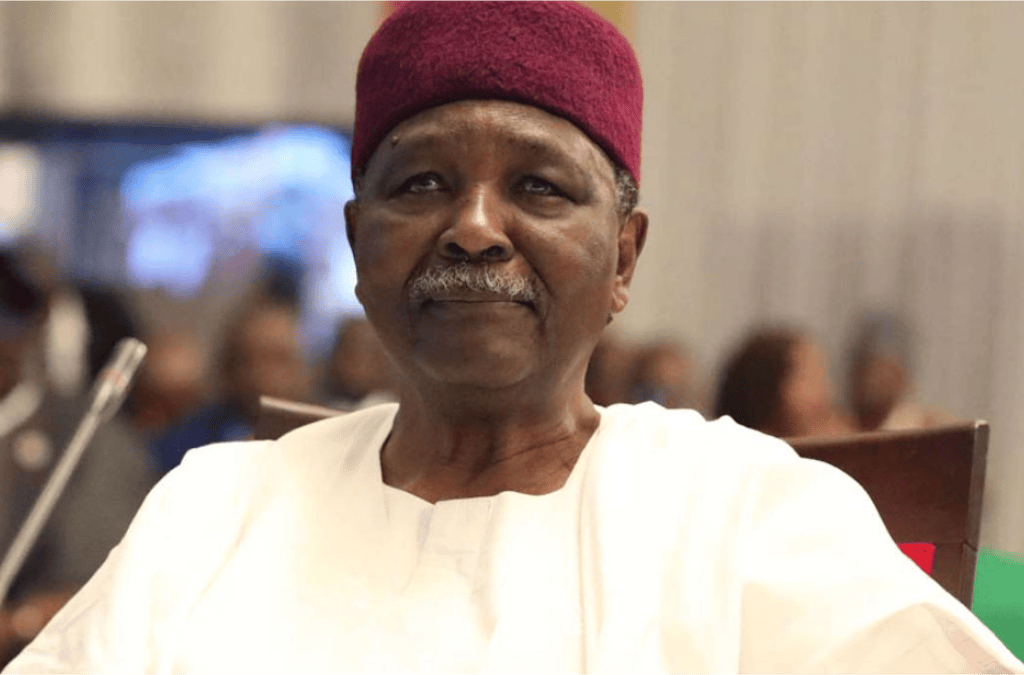
Weighing Gowon’s Legacy Between History and Hell.
ELSIE ONUBOGU
”An evil man will burn his own nation to the ground to rule over the ashes” – Sun Tzu
Between 1967 and 1970, the Nigeria–Biafra War devastated Nigeria’s former Eastern Region, with millions of Igbo people bearing the brunt.
This history cannot, and must not, be reduced to statistics, dismissed as inconvenient,
or buried beneath the political rhetoric of “no victor, no vanquished.”
Neither can the suffering and burden of Biafra be erased in the name of national unity.
General Yakubu Gowon occupies a central place in any honest reckoning of the war, the killings, and its consequences.
In commanding the war, Gowon operated without a true ideology.
His convictions were driven purely by personal ambition, and the capture of state power.
His lies in the recent 881 paged memoir, indicates his continued ‘willingness to burn the people and rule over the ashes.’
His government’s conduct, the blockade, the use of starvation as a weapon of war in contravention of the Geneva Convention, and the twenty-pound (£20) compensation policy that financially emasculated the Igbos are essential to understanding the war and its aftermath.
Gowon’s legacy cannot rest solely on the political outcome of preserving Nigeria’s unity while ignoring the human cost.
This is a moral crisis, and the burden of leadership of this ‘dark past’ rests squarely on General Gowon’s shoulders.
His legacy therefore, must be measured against the cost and consequences of the war – human and otherwise.
A nation’s dark past must be confronted with courage, honesty,
sincere apologies, and a genuine commitment to reconciliation.
History teaches that national healing cannot be achieved by burying or rewriting the past.
As has been stated, ‘confronting a nation’s dark past requires tremendous courage, starting with a collective willingness to remember history honestly, offer sincere apologies, and seek the path of reconciliation…true national healing cannot occur by burying or altering the past.’
Leaders associated with mass atrocities often defend their actions, invoke national necessity, blame their enemies, or insist that the suffering they caused was the price of a greater good.
The legacies of Adolf Hitler, Joseph Stalin, Mao Zedong, Pol Pot, and King Leopold II demonstrate the terrible consequences of political power divorced from human dignity.
Although the circumstances differ slightly, these histories expose the danger of allowing ambition, ideology, or state power to justify mass suffering.
Gowon’s account of the war must be examined against this moral standard.
His government’s claim of pursuit of national unity, political expediency – sustained by the strategic interests of Western governments,
particularly the United Kingdom, cannot absolve it of responsibility for the consequences of its decisions.
Nearly six decades later, Gowon’s continued resistance to acknowledging the casualties, massacres, and suffering raises profound moral questions.
For survivors and descendants, denial compounds the original injury:
first, the suffering itself; then, the struggle to have it acknowledged.
Disputing this history diminishes the victims, disrespects the dead, and reopens wounds that genuine reconciliation ought to heal.
No leader can restore the dead or return the children who never had the chance to grow up.
But a good leader must acknowledge the suffering that occurred under his authority and beyond; express genuine remorse; and offer an unreserved apology.
History offers useful precedents.
Pope John Paul II acknowledged and apologized for historical wrongs associated with the Catholic Church.
In 1996, Archbishop Desmond Tutu wept as he confronted the injustices of apartheid, which he neither designed nor supported.
Australia formally apologized to Aboriginal and Torres Strait Islander peoples for historical injustices, including the forcible removal of children.
Britain, through King Charles, confronted the legacy of slavery, and acknowledged the need to open a door of discussion about reparation.
Acknowledging historical injustice is not an admission of personal guilt for every past act.
It is however:
first – an affirmation of human dignity;
a commitment to moral accountability that comes with the burden of leadership;
an essential door to genuine reconciliation;
more importantly, a historical reckoning for generations to remember.
Beyond his personal involvement, Gowon can learn from history.
As someone said, “A person who has no sense of history is like someone who has no ears or no eyes.”
Against this lesson, one must probe and judge the place of Gowon, his legacy, along with those who commanded and defended the war in history.
The judgment must be grounded in evidence, survivors’ experiences, and an honest accounting of responsibility.
- The Asaba Massacre remains a devastating evidence to the human cost.
- Survivors, including Mr. Sasa Ugwumba-Nwoke, known as “Corporal Nwafor,” who spoke on 7 October 2026 during the 59th commemoration of the massacre, bear witness to a history that cannot be dismissed.
- The call for accountability, which was renewed by the Asagba of Asaba, HRM Professor Epiphany Azinge (SAN), is apropos.
What remains is an honest reckoning with responsibility, particularly by the man who commanded the federal army that massacred millions during the war.
As Frederick Forsyth concluded, “Biafra was a mistake; it should and need not have happened … nothing can or ever minimize the injustice, and … the memory of Biafra and what was done there remains inconvenient for many.”
The inconvenience must not become an excuse for distortion, cover up, or silence.
Gowon owes Biafra—and Nigeria—an unqualified apology for the decisions made by the federal government under his command.
The defence of national unity cannot, by itself, justify the loss of millions of lives, the destruction of generations, or the enduring trauma inflicted on a people.
In the final analysis, history will weigh Gowon’s legacy not merely by the claim of unity or ‘no victor no vanquished’ mantra, but by the human dignity sacrificed in its pursuit.
For a different legacy, he must acknowledge the price paid by those who suffered the war.
What I know for sure is, the door to accountability, remorse, and reconciliation remains open—if Gowon is prepared to walk through it with a wholehearted apology.
Perhaps then, history will rewrite his legacy, sparing him from the same corner of hell where the likes of Adolf Hitler and Pol Pot reside.

ElsieOnubogu.NomMSpEd
©24October2026.
Email: Elsiedavis2025@gmail.com

