M. O. ENÉ
UDI: LAND OF TOMORROW
INTRODUCTION
Udi is land of the free and home of the great. It is a land of love and liberty, the abode of free spirits and benevolent beings of bodily and divine dimensions. From as far away as coastal-delta lands and from north of the border, people have moved in and settled in the area. Since the beginning of human activities in the theater of Igbo civilization, people have come and left. The Arochukwu immigration-emigration, mostly from Amuvi village, is a good contemporary example of the free flow of human traffic through Udi country.
Why has man in his finite wisdom found Udi irresistible? The fertility of the land is, in parts, as you would find in renowned breadbaskets of Abakaliki, Umudike, Ogbaru, Igboariam, Ohaji, Uzouwani, etc., especially in Amọfịa-Agụ, Affa. Udi is a land of great rivers and springs: Adaada, Ajalị, Oji, Arịa, Nvenu, Ngene Evu, Iyi Ububo, etc. Thus, humanity managed to survive and thrive in a liberty-enabling environment devoid of worthless wars and abominable acts. The average Udi person has an inherent love of the land, of peoples, of culture, and of knowledge in general. The quest for maddening materialism is as alien as monarchy is to core Igbo communities.
NOMENCLATURE
The people we today call “Ndị Udi” (people of Udi) are a part of the greater Agbaja people of the Igbo race. Agbaja comprised of peoples between the wooded lands of Awka (capital of Anambra State) to the rocky valleys of Enugu (capital of Enugu State). Agbaja is made up of communities in present-day Udi, Ezeagu, Igbo-Etiti, Oji River, greater Awgu, and Enugu North/East Local Government Areas. However, the influence of Agbaja has extended to lands beyond.
Udi town itself, now known popularly as “Udi Kpomkwem,” was the traditional headquarters of the Igbo northeast subregion that I have called “Waawalandia.” [The Waawa country extends from Awka to beyond Abakaliki.] This was probably due to its panoramic location on the sunny side of Udi Hills, plus a people with big hearts living in an easily accessible savannah country. There are other reasons for the prominence of Udi that are outside the scope of this presentation. However, the term “Udi” no longer applies exclusively to the town of Udi (Kpomkwem), which is fast urbanizing. Currently, in popular parlance, “Udi” can refer to the totality of people living west of the Coal City, Enugu — roughly the same geopolitical Udi Division of yore.
ANTEDILUVIAN AGBAJA
In many Igbo legends, a certain man sires seven sons, who beget the seven villages. The rest is a matter of who has the most convincing story. Udi is no exception. It is agreed that Agbaja begot many sons. They are Neke, Oshie Aniugwu, Ojebe Ogene, Ugwunye, Ezedike, and the founders of Ezeagu, etc. As in such stories, these sons married and had children who founded towns; the sons of the children founded the villages. Some stories sometimes go off the tangent; others tow the well-hewn path in Igbo mythology. Somewhere along the line, we get back to the same basic conclusion: We are all brethren in humanity.
The fact remains that no one knows exactly who first inhabited a particular part of any country. Even on a virgin land with no sign of previous human habitation, no one can claim to be the founder of such settlements. In parts of Igboland, original populations have survived with such names as “Ụmụamadiala” or “Ụmudianị” (sons of the soil), even went those who claim ancestry to recent immigrants dictate the culture. Nri is a very good example. For the purpose of this presentation, let us agree that Agbaja moved into the area, produced seven children with some lady or ladies, and so the story began.
NEKE
According to legend, Neke had seven sons collectively called Umuneke: Udi, Abịa, Okwe (Amaokwe), Agbudu, Agụ (Obinagụ), Abị Ezike (Ụmụabị), and Aga (Ụmụaga). These sons of Neke had children, who founded villages. Example: the five sons of (ụmụ) Abi Ezike are Abịa, Ighum, Alụgwo, Ogbuabala, and Ụfịala [See http://www.expage.com/page/umuabi/%5D. Udi has Ezechime, Ekeneene, Amægụ, Ọkụnịnọ and Ụmụọka; Abịa has Agbaanị, Enugu-Abịa, and Ogwugwu. Aga might be the last born, but he was apparently the most procreative. In Ụmụaga town, we have: Ụmụnnacha, Ụmụụkpala, Umueze, Ụmụabịanta, Ụmụalụm, Amaata, Ụmụataaguma, Ụmụataogene, Ụmụamọm, Ishiagụ, Ndịbinagụ, Obodoinyi, Ụmụaneke, Ụmụọnaga, Umungwu, Umuchime, and Abanịbọ.
OSHIE
A version of the Neke legend has it that Oshie, another son of Agbaja, married Nsudi and had two sons and a daughter (a departure from the seven-son song). They are: Eke, Nsude, and Nneke — the daughter. Some Oshie descendants believe that Nneke married and begot Udi, Abịa, parts of Amaokwe (Idedu). Now, whom did Nneke marry? Neke? Or, was “Nneke” actually “Mrs. Neke”? This claim does not add up because “Nneke” would be married to her paternal uncle Neke. Ọbịọma, sandwiched between Abịa and Nsude, claims direct descent from Neke and or Oshie.
Eke has seven sons (back to the norm!). Two of Eke sons died young. The survivors are: Amankwọ, Amụfịa, Enugu, Ogui, and Ọma. The Ajalị River forms the boundary between Eke and Ọwa, now in Ezeagu Local Government Area (LGA). Note that names of towns do not always coincide with the names of legendary founders. Enugwu, for example, is more a geographical nomenclature than a corruption of the popular name “Ene-Ugwu.” In Amaokwe, we have Ọnụịcha, Enugwu, Ụwaanị, etc.; In Ụmụaga: Ndịbinagụ (those who live in the woods), Amaata (pine-grass square), Ishiagụ (head of the woods), and Ụmụarọ (children of Arọ settlers); etc.
OJEBE OGENE
North of Oshie clan, we have the children of Ojebe Ogene. Some authors believe that Ojebe Ogene was a woman, but no one says whom she married; besides, matrilineal descent is rare in Igbo mythology. So, the patrilineal argument holds in almost all cases. Jude Akubuilo, Ph.D., a Beverley Hills-based attorney, confirmed that Ojebe Ogene had seven sons. Writing in Waawanet, Dr. Akubuilo (“Okeosisi Ojebeogene”) pointed out on Sunday, June 27, 1999, that “Ebe is the eldest, followed by Abor, Ukana, Awhum, Okpatu, Umulumgbe, and Ukehe.” Ukehe is now in Igbo-Etiti (Nsụkka zone), but its link to Ojebe Ogene legend is not in dispute. The other Ojebe Ogene towns formed part of defunct Odo Ọzọ LGA. Ukehe is not the only Agbaja son out of the Udi loop; Nike, as we shall see, is now in Enugu East (Nkanu) senatorial sphere.
UGWUNYE
The fourth group of communities in Agbaja sphere is Ugwunye. It is made up principally of Affa, Egede, and Nike. Nike is no longer in Udi political sphere, but the Umuugwunye link remains.
EZEDIKE
In this group of direct brethren are grouped the following towns are: Akpakwume, Nze, Oghu, and Ụmụọka, all gateways into Nsukka communities.
NGWUO
In “What does Enugu mean?” Ikechukwu Ude-Chime told an interesting story of the people we now know as “Ngwo,” a part of today’s Udi and Enugu North LGA. Ngwu Nwangwuakọ was a great hunter from Neke (probably from outside Agbaja proper). He had ten children known collectively as Ngwuo Ili. One of the sons was Amaudeneọgụ, whose name his descendants adopted for their village and, because of the location of their village on a hilltop (“enu ugwu”), they became Enuugwu Amaudeneọgụ.
“Enugu” is an Anglo adulteration and shortening of the word “Enuugwu Ngwuo.” It is also a fallacy in naming of the city: You see, the city of Enugu is situated in a valley, on the farmlands of Ngwo, not on top of a hill as the name suggests. “Ụwaana” (valley) or “Ụwaani” (a quarter in today’s Enugu) comes closer to defining the geography of the capital of Igbo nation.
COLONIAL
Communal spirit, extended-family structure, and responsive republicanism of Udi people of Igbo heartland made developmental work under colonialism much more effective and efficient and the people’s progress possible. Many communities from as far away as the emirate of Gwandu sought to learn from the Udi experience. Udi did not swallow colonialism hook, line, and sinker. Everyone, black or white, could settle in Udi and coexist constructively and peacefully. However, when the European tourists turned around to rule, the people refused the concept of taxation without representation.
Chief Onyeama n’Eke acquiesced to the tyrannical repudiation of popular participatory politics (ọha na eze). The people revolted. This spirit of revulsion at oppression was reenacted in the Udi Revolt and the bloody Coal Miners’ Strike (Iva Valley, Enugu) of November 18, 1949, which signaled the beginning of the struggle for independence. One must not forget the refusal of Udi people to succumb to an attempted demystification of the “Mmanwụ” mores by the colonial Chadwick regime. Udi people are neither protesters nor pushovers; any attempt to arrogate oneself to the pinnacle of absolute power is almost always resisted. Udi folk did not fight the coming of Europeans, decades after they had established bases in southern Igbo communities, but they could not tolerate the concept of recent immigrants using local thugs to lord it over a responsively republican race. It is no coincidence that Udi was the first political capital of lands east of the Niger. The capital was only moved to Enugu after the discovery of coal in Udi Hills.
Regardless of the oppressive ways of colonialism, Udi people embraced the wisdom of western education in masse. No wonder Udi marked the beginning of mass literacy in Nigeria. The movie, “Daybreak in Udi,” awakened in the people in and around Udi and beyond to the new wave of formal education. The increased consciousness in formal education was responsible for the large turnover of teachers of Udi extraction at independence in 1960.
CULTURE
There is a certain commonality of culture in the Udi area, but it varies as much as cultural diversity in Igboland. For example, Odo festival occurs in northern parts of Udi (Odo Ọzọ area), while Mmanwụ appears more from Oshie to Neke communities. Eke is a town of both Odo and Mmanwụ. Ụmụabị had arguably the strongest attachment to the Mmanwụ phenomenon; Nachị, much less so. Ụmụaga, besides its strong Mmanwụ culture, has the popular rites of rebellion called Ogirianyashị and Okomọyọ, during which the young are allowed to revel all-night long under the supposedly watchful eyes of older folk. There are slight differences in New Yam festivals, marriage particularities, masquerade initiation rites, title-taking rites, etc. Most importantly, no Udi town speaks the same dialect as the other. Many people can detect the differences in all Agbaja dialects.
Udi people have a worldview that is not very different from mainstream Igbo communities. They believe in the sacredness of Anị, the Earth deity, and in the supremacy of Chi Ukwu (Almighty God). Each town in Udi has at least one major deity, a being force (alụsị) to which a shrine is built. For example, Anị Udi, Nneche Ụmụaga, Anịobodoishiokwe, etc. Ọnụ Eke Agu belongs to Abịa, Amaokwe, and Udi towns, possibly in honor of their common Oshie ancestry.
Different towns have different taboos. For example, the people of Ụmụaga do not eat snails, but they won’t stop Amaokwe ladies from collecting as much as they could carry — as long as they do not destroy farm crops or use an indigene’s utensils to eat or drink. In Ngwo, Afịa Ụsụ market is located beneath giant cotton trees on which bats habit in their thousands. Though eating bat is not prohibited, no one hunts bats at the market. Oshie communities curiously do not intermarry, for they are descended from one man; curious because intra-marriage occurs in these communities. Intermarriage is virtually zero between the people of Nsude, Eke, and parts of Amaokwe, Abịa, and Udi (kpọmkwem).
GOVERNMENT
Like most communities in Igboland, Udi people are republicans from time immemorial. They had no kings, and they had no organized military or police force. In fact, there have no formal judicial nor penal system. On June 19, 1973, Ichie Noo Udala of Ụmụaga, aged c.102, stated the obvious:
Before the white man came we had no chief that saw to the affairs of the town. But we had several institutions that helped us organize our activities. The government of this town was not vested in one man. …. In the olden days, each village had a person that we could now call a chief to head the town’s political and administrative activities. This man was normally the oldest man of that village, and was called onye ishi ani. Within this village we have another man that heads the affairs of a ‘lineage’ or umunna called okenye umunna. During any cases affecting the whole town, the ndi ishi ani, village heads, would meet and discuss effectively the issues involved. They met as equals….
[From Igbo Worlds: Village Democracy: an Agbaja example, collected by E. N. Okechukwu]
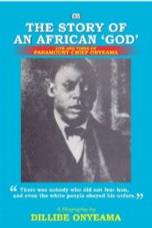
And so it was until a certain Agbaja man from Eke named Ọzọ Amụlụ Ọnwụsị married a beautiful lady from Ebe named Chinazungwa Ijeonyeabo. They had a son, Onyeama. He grew up to become the nearest Agbaja came to having one identifiable ruler in living memory. The legacy of Onyeama is captured in Dillibe Onyeama’s book: Chief Onyeama: The Story of an African God. The first and last Okwuluọha Agbaja and an autocrat by all accounts, he is credited with making possible the establishment of Enugu as the fastest growing metropolis of the last century. Over 120 years ago, the core location of Enugu was mostly a farmland; today, it is the political capital of the Igbo nation.
NATURAL RESOURCES
Natural resources are abundant in Udi. Ọkpa, also called bambara nut, is a ritualized plant in parts of Udi. One seed could yield as many as 200 seeds within months of cultivation, without serious tending, weeding, or fertilization. The palm trees of Udi yield the best palm wine on earth. Tappers from far and wide agree that Udi “up wine” is made of divine stuff. Cashew trees grow freely in the area, requiring serious control. Cassava, yams, stringed beans, vegetables, peppers, garden eggs, oil beans, tropic fruits, and assorted agricultural products come from Udi. The lands of Udi harbor minerals such as high-quality coal, iron ore, and petroleum. And we have not looked hard enough for gold!
UDI WOMEN
Udi and the entire Agbaja have the most beautiful, the sexiest, and the most powerful women in Igboland. And they make the best wives. Such a combination does not exist just about anywhere in the whole wide world. Udi women adapt easily. They make the best homes. At some point in the 80s, some communities expressed concerns at the rate Udi daughters married outside the area. Then again Udi men married marry some of the best from outside the area. It is no wonder that one of the world’s most beautiful girls is from Udi, and she married one of the most recognizable men in the world, Dim Chukwuemeka Odumegwu-Ojukwu, the leader of the Biafran Revolution.
What Ikemba Nnewi (Odumegwu-Ojukwu) wrote about Miss Bianca Onoh, in “Because I am involved” (1989) is true of Udi women:
“What can I say about this very beautiful young girl that won the 1989 Miss Inter-Continental pageant? … [If] I exclaim with all men that she is beautiful, it would be like standing in front of the Empire State Building in New York and exclaiming that the building is high. I would be stating the obvious and it would be trite.
And you wonder why he crossed the proverbial seven seas to marry her. Before Bianca’s brain and beauty, many Udi women were powerful and successful ladies of their times: Mrs. Vero Onyia, prominent Lagos entrepreneur and socialite; Lady Neboh, former NPN women leader; Dr. (Mrs.) Ngozi Ene, Librarian ESUT; Dr. (Mrs.) Maria David-Osuagwu, university dean; Dr. (Mrs.) Maludi Mgbo, former Head of State Civil Service, Enugu State; etc. There are countless other professionals who married home or abroad. Don’t forget: Udi women have the best coordinated dance steps anywhere on solid earth; it is in their genes.
UDI MEN
Starting from the progenitor Agbaja, great men come from Udi neck of the woods. Udi has seen a long line of great men. The legendary Ichie Nnebe Ụzọ introduced iron smithery to Awka; he was an Udi neighborhood. Obviously, Udi people were accomplished technologists before Nnebe took the technology to Awka, which mastered and ritualized the art of ironworks. Regardless of the tyranny of Onyeama, he was the greatest Igbo king in the last century. The first Igbo medical doctor was Dr. Simon Ezevuo Onwu, son of Ozo Ofianaechafa of Amaozala, Affa. The first Nigerian World Court Judge Justice Charles Dadi Onyeama, a contemporary of Dr. Onwu, was also an Udi son from Eke. The first pilot hailed from these lands.
Udi has produced prominent personalities, including Nigerian Supreme Court Justices Philip Nnaemeka Agu and Anthony Aniagolu. From Chief Gabriel Onoh, father of Chief C. C. Onoh through great professors (Odenigwe, Egudu, Aneke, Ene, Chime, Nebo, etc.) to Charles Dillibe Onyeama, one of the first two Africans to attend the exclusive English Eton College, Udi men have left footsteps on the sand of time. Great teachers, technocrats, and technicians, Udi has produced them all: Achu, Agu, Agbala, Akpu, Ali, Aneke, Ani, Chime, Ebulu, Egudu, Ekwe, Ene, Enenwali, Eze, Ezeogba, Nebo, Nevo, Ngene, Ngwu, Njeeze, Obodo, Ochi, Odenigbo, Odenigwe, Odo, Offor, Ogakwu, Ogbata, Ojiibe, Ome, Onaga, Onoh, Onovo, Onyia, Owoh, Ozo, Udala, Ude, Ugwu, etc.
CONCLUSION
Udi, the anvil of Waawa awareness, is not where it should be in terms of modern development. Mass literacy campaign started in Udi when others believed only the rich and wealthy went to school. Udi should house an institution of higher learning in this decade. With the busiest highway vehicular junction in Africa at Ninth Mile Corner and a culture of ironworks, Udi should be a manufacturing and distribution center. The tallest mountain peak in southern Nigeria (Udi Hill) is in Udi; and from its wombs Nigeria extracted coal in abundance, ferried it across the land to its southern tip at Oji River to produce electricity. Almost 100 years later, some communities have no dependable supply of electric power.
Udi men mined coal and opened Enugu, but they have little to show for it. They have not taken to the streets, protesting, or calling for resource control or preaching the politics of “we-we” and “them-vs-us.” That’s not the Udi way. Those who live and thrive in Udi, no matter when they or their forefathers and foremothers got there, are no rabble-rousers. In the fullness of time, Udi will blossom for all who believe in its essence: fraternity, liberty, equity, and progress. It won’t happen without you: family and friends of Udi.
The forefathers of Udi people knew why they settled in this place. It is surely a land of greater tomorrow. The coalmines shall resurrect to produce reliable and cleaner coal-powered, efficient electricity at Oji River thermal station. The towering palm trees shall sustain the vegetable oil refinery at Nachi. Adaada, Ajali, and Oji River shall provide all the water needed for agriculture, the many bottling plants at Ngwo/Nsude, including the mega Heineken plant, the future steel plants at Nsude, and the hydrothermal plant at Oji River.
For those who want natural drinks, the best palm wine in the whole wide world shall flow from Nkwọ Agụ Market in abundance to compliment the best “ọkpa” (Udi bread) on earth. Udi has the best tapioca salad, so good it is called “Udi or Waawa salad.” With these products, peaceful passengers traveling through Ninth Mile Corner shall be treated with love to the best stuff from Earth. When Enugu International Airport becomes operational, the first regional airstrip at Udi could be reopened for cargo and shuttle services. Most importantly, the 24 towns in the presently too-large Udi Local Government Area have some of the best human heads around, the cream of its tomorrow, to support and sustain the greenness and greatness of Udi, Enugu State, Igboland, Nigeria, Africa, and humanity at large.
Thus, we shall together make Udi a land of greater tomorrow. Nke iru ka n’Udi.
==========================================================
This is an updated version [Friday, August 29, 2003] of a short commentary on Udi by Dr. M. O. Ene, as published in the souvenir journal of the launching of Udi Development Association, Washington, DC metropolis on Saturday, August 18, 2001. It is republished with permission and minor corrections and no updates on Sunday, November 21, 2021 to expose a pirated version circulation on social media.
==========================================================
The author welcomes comments.
Contact the author: egbedaa@aol.com
©M.O. ENE, 2001

Coming next>> AGBAJA: The Kingdom of Onyeama
 aladimma.net